
The complete guide to the conversion tunnel: from visitor to loyal customer
In the world of digital marketing, it's easy to get lost between the different tactics. We publish content, we run ads and we send emails, however, Without a common thread, these actions remain isolated. This is where conversion tunnel comes into play. It's a fundamental but often misunderstood concept. In fact, It represents the exact path a prospect takes, from their first interaction with your brand to their conversion into a customer, and then into an ambassador. Understanding and mastering every stage of this sales funnel is absolutely vital to generating a predictable revenue stream. So, This guide has been designed to provide you with a clear and detailed roadmap for building and optimizing your conversion tunnel that turns your visitors into loyal customers.
1. What is a conversion tunnel and why is it vital?
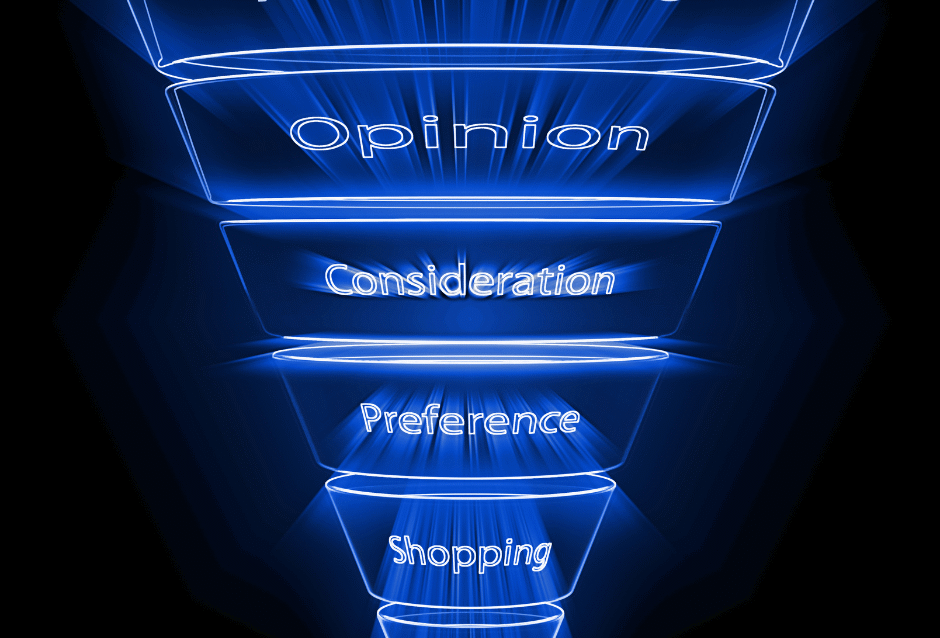
A conversion tunnel (or sales funnel) is a visual representation of your customer journey. It is broken down into several stages, from the broadest audience to the most qualified. The idea is to attract a large number of people to the top, and gradually filter them out until only the most interested prospects, ready to buy, remain. Therefore, The conversion rate at each stage is a key performance indicator.
Indeed, A digital marketing strategy cannot do without this tool. First and foremost, It allows you to structure all your marketing and sales actions in a logical way. In addition, It helps you identify bottlenecks, i.e. the stages where you lose the most leads. For example, If you attract a lot of visitors to your site, but nobody fills in your forms, there's a conversion problem at this stage. So, analysis of conversion tunnel allows you to make informed decisions.
2. The 3 main stages of the conversion tunnel (TOFU, MOFU, BOFU)
Visit conversion tunnel is traditionally divided into three main sections: Top of Funnel, Middle of Funnel and Bottom of Funnel. Each stage has a specific objective and tactics.
2.1. The top of the funnel (TOFU) : Awareness and appeal
At this first stage, your main objective is to attract the widest possible audience. This audience doesn't yet know you, or isn't yet ready to buy. Therefore, Your content should focus on education and solving common problems. The aim is to introduce them to your brand without making a direct sales offer.
- Content marketing: It's the mainstay of this stage. Indeed, blog posts, YouTube videos, infographics or podcasts attract organic traffic. For example, A blog post on “How to choose the best digital marketing agency” attracts an interested audience without directly selling your services.
- SEO : Search engine optimization is crucial. In this way, In this way, you ensure that your content is visible when people search for information on the problems you solve. In addition, It's an excellent way to capture the attention of a qualified audience right from the start.
- Social networks : They are ideal for creating brand awareness. Indeed, By sharing useful and entertaining content, you attract new subscribers and position yourself as an authority in your field.
2.2. Funnel medium (MOFU): Consideration and Evaluation
Once you've attracted visitors to the top of the conversion tunnel, At this stage, your aim is to turn them into qualified prospects. At this stage, they know they have a problem and start looking for solutions. Your role is to show them that your company has the best solution.
- The Lead Magnet: One of the most effective tactics is to offer a free, high-value-added resource in exchange for contact information (name, email). For example, a white paper, a buying guide, a checklist or a webinar. Indeed, The Lead Magnet is the gateway to the rest of the process.
- Email nurturing : Once you have a prospect's email address, you can send it in an automated email sequence. These emails must not be offers to sell. On the contrary, They must be educational, and help prospects to better understand their problem and your solutions. Therefore, You build a relationship of trust.
- Case studies and testimonials : These contents are very powerful in the middle of the funnel. In fact, They prove that you've helped other customers with the same problem. In addition, They reinforce your credibility and expertise.
2.3. The bottom of the funnel (BOFU) : Decision and Conversion
This is the crucial stage when the prospect is ready to make a decision. They know their problem, they've explored their options, and they're about to choose a service provider. Your aim is to convince them that you're the best possible solution.
- Landing pages : These pages are designed to convert. Indeed, They are uncluttered, with a clear message and a highly visible call to action (CTA). For example, a contact form, a button to request a quote or a free trial offer.
- Offers and consultations : Offering a free consultation or personalized audit is a great way to take the prospect to the next level. This gives you the opportunity to talk directly to your prospect, understand their needs in depth and present them with a suitable offer.
- Social proof: Customer reviews on your website or Google My Business reinforce your credibility. Video testimonials are even more powerful. Indeed, A person who sees real customers talking positively about your service will be more inclined to trust you.
3. Optimizing the conversion tunnel: the most critical phase
A conversion tunnel is not a static system. It must be constantly measured and optimized. This is one of the key phases of your agency strategy.
3.1 Measure and analyze each step
To improve your conversion tunnel, But first, you need to know where you stand. Use tools like Google Analytics to track traffic, bounce rates and conversion rates at every stage. Indeed, A simple drop in performance may indicate a problem to be solved. In addition, A dashboard on Google Looker Studio will help you visualize this data and quickly identify bottlenecks.
3.2. A/B tests
A/B testing is a simple and effective way of optimizing your conversion tunnel. For example, You can test two versions of the same email title or landing page. So, you'll know which version is most effective in generating conversions. All in all, The key is to never stop testing to improve your performance.
4. The essential tools for building your conversion tunnel
To build a conversion tunnel you need the right tools.
- The website : It's the foundation of everything. It has to be fast, easy to navigate and optimized for SEO.
- Analysis tools : Google Analytics and Google Search Console give you data on your visitors' behavior.
- Marketing Automation platforms : Tools like Brevo or HubSpot let you create automated email sequences and manage your contact lists.
- CRM : A customer relationship management tool helps you track your leads, from the moment they enter the conversion tunnel until their conversion.
Conclusion
In a nutshell, the conversion tunnel is not just a theoretical concept, but a concrete action plan to guide your prospects towards purchase. Indeed, By structuring your marketing efforts, creating relevant content for each stage and measuring your performance, you can turn your website into a customer-generating machine. Therefore, master the conversion tunnel is the key to sustainable, predictable growth for your company.
About Astral Digital
At Astral Digital, Our expertise lies in creating tailor-made digital marketing strategies that generate measurable results. We are a digital marketing agency in Morocco that uses data to guarantee a positive return on investment for our customers. Contact Astral Digital for a free audit of your strategy.



 French
  English