

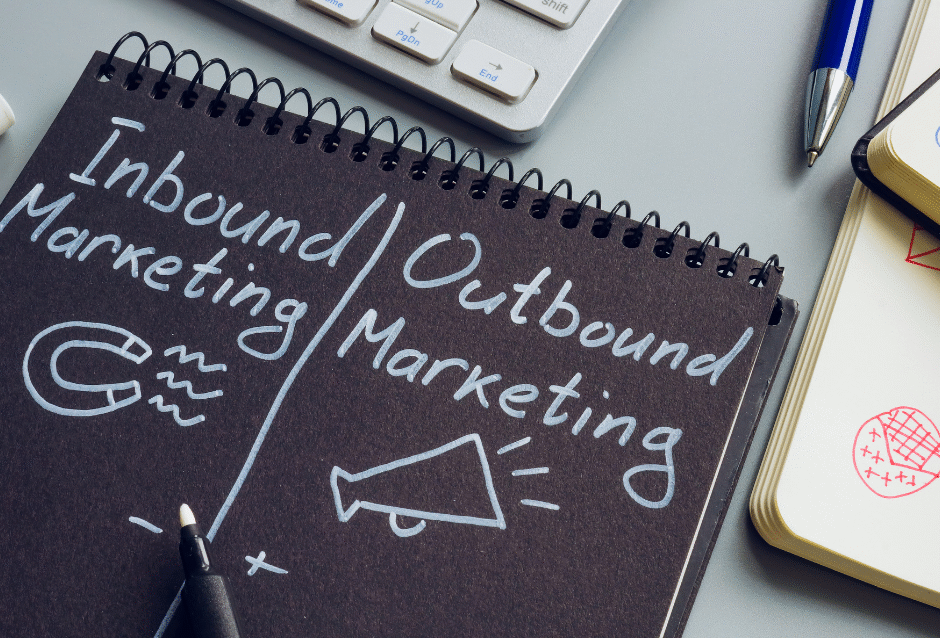
Inbound vs. outbound marketing: which approach is right for your company?
In the world of marketing, there are two fundamental philosophies at odds with each other: attraction and interruption. These two approaches, known as inbound and outbound marketing, define how a company interacts with its potential customers. Choosing the right method, or combination, is therefore a crucial decision that can determine the success of your marketing strategy. Indeed, inbound marketing focuses on the art of attracting customers to you, while outbound marketing seeks to push your message towards them. Therefore, understanding the differences between these two approaches is the first step to building an effective strategy that generates leads and growth. This guide has been designed to help you see clearly and make the best decision for your business.
1. What is inbound marketing? The philosophy of attraction
Inbound marketing is a methodology for attracting prospects in a non-intrusive way. The idea is to create content that is relevant and valuable to your target audience, so that they come to you on their own. In this way, you don't try to interrupt people, but rather solve their problems and answer their questions.
1.1. The fundamentals of inbound marketing
Inbound marketing is based on a simple philosophy: earning attention rather than buying it. To achieve this, a company positions itself as an expert and a source of reliable information. As a result, it builds trust and a lasting relationship with its audience. Although inbound marketing is a long-term investment, its results are sustainable and accumulate over time. What's more, this approach is much more appreciated by consumers, who are becoming increasingly skeptical of traditional advertising.
1.2. Key inbound marketing tactics
To attract the right traffic to your website, inbound marketing relies on a variety of digital tools:
Content marketing Inbound marketing: This is the cornerstone of any inbound marketing strategy. It involves creating blog posts, case studies, videos, white papers and infographics that answer your audience's questions. By producing educational content, you attract prospects who are already looking for information related to your industry.
SEO (Search Engine Optimization) Once content has been created, SEO ensures that it is visible on search engines. As a result, your content appears in search results when your prospects type in their questions. What's more, inbound is closely linked to SEO, strengthening your presence over the long term.
Marketing on social networks These platforms are used to share your content, interact with your community and extend the reach of your publications. They also help you build a strong, consistent brand image.
Email marketing After attracting a prospect to your site, emailing is used to nurture them with relevant content and move them along your sales tunnel. It is therefore an essential tool for inbound marketing.
2. What is outbound marketing? The interruption method.
Visit Outbound marketing is the traditional approach of pushing a message to a large audience, whether receptive or not. This is interruption marketing. The idea is to make yourself visible at all costs by placing ads or messages where customers are likely to see them.
2.1. The fundamental principles of outbound
Unlike inbound, outbound does not seek to attract, but to interrupt. It's a “cold” prospecting approach, where the company takes the initiative in the conversation. Results can be very rapid. However, They are often short-lived and less profitable in the long term. Indeed, However, this method tends to generate a higher cost per acquisition, and the relationship with the customer is often weaker. Therefore, the Outbound marketing is perceived as intrusive by many consumers.
2.2. Key outbound marketing tactics
Visit Outbound marketing combines traditional and digital tactics.
- Traditional advertising: Television, radio, magazines, billboards and newspapers are classic examples of Outbound marketing. These channels enable us to reach a mass audience very quickly.
- Cold prospecting : Telephone canvassing, mass e-mailing and door-to-door canvassing are examples of direct tactics. On the other hand, However, these methods have a very low success rate and are often poorly perceived.
- Online paid advertising: Banner ads on websites, ads on social networks (such as Meta Ads) and ads on search engines (such as Google Ads) are tactics used by Outbound marketing digital. Even though they are intrusive, they can be very effective in generating leads quickly if they are well targeted.
- Trade shows and events : Taking part in events is a form of outbound marketing, where you go out and meet prospects.
3. The big differences: Inbound vs. Outbound
To choose the right approach, it's essential to understand the fundamental differences between the two.
| Features | Inbound Marketing | Outbound marketing |
| Approach | Attract | Interrupt |
| Cost | High initial cost, lower cost per lead over the long term. | High and constant cost (purchase of space, prospecting expenses). |
| Results | Slow to start, but lasting and growing. | Fast and immediate, but ephemeral. |
| Customer relations | Strong, based on trust and expertise. | Often transactional and less personal. |
| Relevance | Highly relevant, because it meets a need expressed by the customer. | Limited relevance, as the message is sent to an untargeted audience. |
| Measurement | Very easy to measure with analysis tools (Google Analytics). | More difficult to measure precisely (for example, the impact of a radio ad). |
All in all, the biggest difference lies in the relationship you build with your prospect. The Inbound marketing focuses on creating a relationship, while the Outbound marketing focuses on sales.
4. Winning combination: the role of a hybrid strategy
The question is no longer whether to choose inbound or outbound, but rather how to combine them to achieve the best results. Most successful companies use a digital marketing strategy which integrates the two.
Indeed, Outbound can be used to generate a rapid flow of leads and to promote inbound content. For example, You can launch targeted advertising campaigns (outbound) to promote a white paper (inbound) you've created. So, you use the speed of the outbound to feed your inbound marketing strategy.
In addition, This hybrid approach enables us to reach a wider audience and accelerate the customer journey. Therefore, You combine the rapid visibility of outbound with the durability and confidence of inbound.
Conclusion
In a nutshell, the choice between Inbound marketing and Outbound marketing depends on your objectives, your budget and the urgency of your needs. If you need fast results, outbound is your ally. However, If you're looking to build strong brand authority and generate a stream of qualified leads over the long term, inbound is the way to go. Finally, For most companies, the best approach is to combine the two methods to create a "one-stop shop". digital marketing strategy that guarantees both immediate results and sustainable growth.
About Astral Digital
At Astral Digital, Our expertise lies in creating tailor-made digital marketing strategies that generate measurable results. We are a digital marketing agency in Morocco that uses data to guarantee a positive return on investment for our customers. Contact Astral Digital for a free audit of your strategy.



 French
 English